Weekly Love Guidance
Consent-first, practical guidance on love traditions, reconciliation, boundaries, and relationship clarity.

Love. Clarity. Choice.
Hoodoo is African American folk magic; Vodou is a religion with spirits, priests and community. Here is how they differ, where they overlap, and how each approaches love.
Quick answer: Hoodoo vs voodoo comes down to practice vs religion. Hoodoo, also called rootwork or conjure, is African American folk magic, usually practiced alongside Christianity, with no formal clergy or initiation. Voodoo, spelled Vodou in Haiti, is a religion with spirits called lwa, priests, temples and community ceremonies. The two overlap in New Orleans, but they are not the same thing.
Related guidance: Read our deeper guide to hoodoo love spells and their roots, how a honey jar love spell is traditionally made, and what a sweetening spell is meant to do.
| Aspect | Hoodoo | Haitian Vodou | Louisiana Voodoo |
|---|---|---|---|
| What it is | Folk magic (rootwork, conjure) | A religion | A religious tradition, later heavily commercialized |
| Where it formed | The American South, among enslaved Africans and their descendants | Haiti, in the French colony of Saint-Domingue | New Orleans and south Louisiana |
| Spiritual focus | God, ancestors, the Bible, roots and curios | Bondye, a distant creator, and the lwa (spirits) | Spirits and Catholic saints, with Haitian influence |
| Clergy and initiation | None formal; learned from family and mentors | Priests (houngan) and priestesses (manbo), formal initiation | Priests and priestesses; Marie Laveau is the best-known figure |
| Link to Christianity | Often practiced by Protestant Christians; Psalms are common | Interwoven with Catholic saints and feast days | Strong Catholic influence |
| Typical love work | Honey jars, name papers, mojo bags, candles | Service and offerings to the lwa, often Ezili Freda, with a priest | Gris-gris bags, candles and offerings; now often sold as souvenirs |
Key Takeaways
At its core, hoodoo vs voodoo is a question of practice vs faith: one is a set of practical techniques and the other is a religion. A hoodoo practitioner works with roots, herbs, candles, oils and prayer to solve practical problems: love, money, protection, luck, justice. A Vodou practitioner belongs to a religious community that serves spirits through ceremony, song, drumming and offerings.
The confusion is understandable. Both grew out of African spiritual traditions carried by enslaved people to the Americas, both blended with Christianity, and in older New Orleans usage the two words were often used loosely or interchangeably. Hollywood then flattened both into one spooky image. Untangling them is the first step to respecting either.
Hoodoo is a body of African American folk magic that took shape in the American South. It draws on West and Central African practices, especially from the Kongo region, combined with Native American plant knowledge, European folk magic and Protestant Christianity. Practitioners are called rootworkers, root doctors or conjure workers.
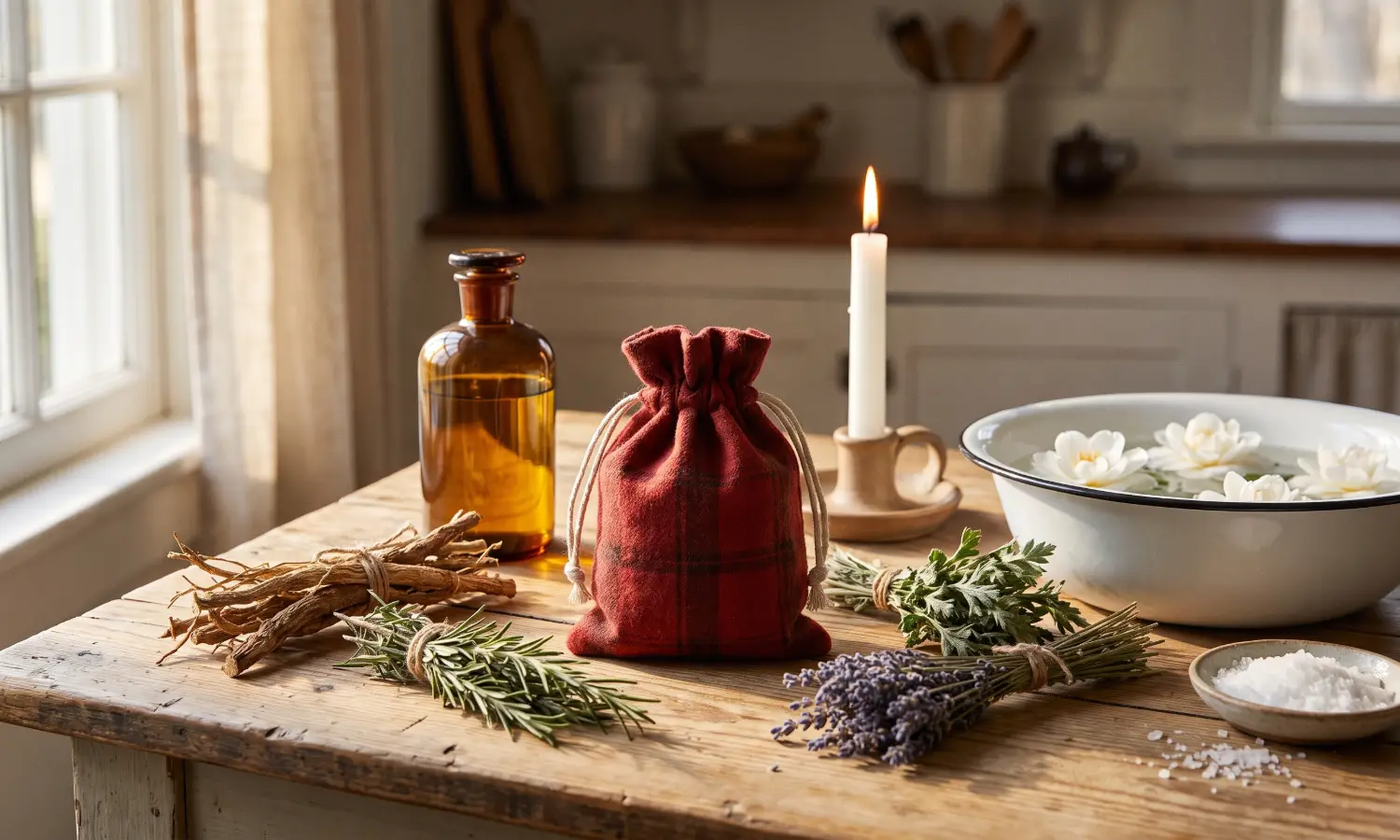
Its toolkit is practical and portable: mojo bags (also called hands or tobies), roots such as High John the Conqueror, dressing oils, powders, candles, honey jars and written petitions. Much of it was passed down in families and communities rather than written. Writer and anthropologist Zora Neale Hurston documented hoodoo in her fieldwork and in her 1935 book Mules and Men, which remains a classic starting point.
No. Hoodoo has no creed, clergy or required initiation, and most traditional practitioners have been Christian. The Bible is treated as a powerful book, and the Psalms are read for protection, healing and success. That is why people describe hoodoo as a practice that sits alongside a faith rather than replacing one.
Haitian Vodou is a religion that developed among enslaved Africans in colonial Saint-Domingue, now Haiti, drawing on Fon, Yoruba and Kongo traditions alongside Roman Catholicism. The name comes from vodun, a Fon word for spirit or divinity. Many Haitians and scholars prefer the spelling Vodou, partly to separate the religion from the movie version of “voodoo.”
Vodou recognizes a remote creator, Bondye, and serves many spirits called lwa, each with its own personality, colors, songs and symbols. Ceremonies take place in a temple (ounfò) and are led by a houngan (priest) or manbo (priestess). Drawn sacred designs called vèvè, drumming, dance and spirit possession are central to worship.
Louisiana Voodoo, often called New Orleans Voodoo, grew from African traditions in colonial Louisiana and was strengthened by refugees from the Haitian Revolution who arrived in the early 1800s. It absorbed Catholic saints and local folk practice. Its most famous figure is Marie Laveau, the nineteenth-century “Voodoo Queen” of New Orleans.
Today Louisiana Voodoo exists both as a living spiritual practice and as a tourist industry of shops, tours and gris-gris bags. That commercial layer is where much of the confusion with hoodoo begins.
There is no central authority in hoodoo, so there is no official ruling. The question is debated openly, and both sides make serious points.
Many Black American practitioners describe hoodoo as an ancestral practice born from the survival of enslaved people. In their view, outsiders should not practice it, or at least should not rebrand it, sell it, or strip it of its history and Christian roots. Other practitioners note that rootworkers have served clients of every background for generations and that hoodoo has always borrowed widely, so they treat it as open to respectful learners.
The common ground is clear: learn from Black practitioners and sources, credit the tradition by name, do not repackage it as a generic aesthetic, and listen when people from the culture explain what is sacred to them.
The image of a doll stuck with pins to control or hurt someone owes more to European poppet magic, horror films and the New Orleans souvenir trade than to Haitian Vodou. Dolls do appear in some Vodou and Louisiana settings, but usually as offerings, ritual objects or representations of spirits, not as remote controls for people.
Much of the sensational picture dates to the US occupation of Haiti from 1915 to 1934, when lurid travel books and early horror films such as White Zombie (1932) gave American audiences a frightening caricature of Vodou. That caricature still shapes how the word “voodoo” is used in English.
The same stereotype fuels the “voodoo love spell” market, which sells the idea that a doll and a name can bend someone’s will. Neither Vodou nor hoodoo is well represented by that promise.
Love work is where the hoodoo vs voodoo difference becomes most practical: in hoodoo, a person can work alone with a few materials, while Vodou love work runs through spirits, priests and community. Love has long been one of the most common reasons people consult rootworkers. Traditional hoodoo approaches include:
Older folklore also includes formulas for slipping things into a person’s food or drink. We do not teach those: they cross consent and can be unsafe. A respectful approach is to sweeten your own outlook, work on a relationship together with a willing partner, or write a petition for the kind of love you hope to find rather than for one person’s will.
In Vodou, love troubles are not handled with a mail-order spell. A person usually brings the problem to a houngan or manbo, who may consult the spirits and recommend prayers, offerings or a ceremony. The work happens inside an ongoing, reciprocal relationship with the lwa and with a community.
Ezili Freda, a lwa of love, beauty and luxury, is often approached in matters of the heart. Devotees honor her with perfume, sweets, flowers and pink or white offerings. That relationship is built over time through service, not purchased once as a result.
Search for a voodoo love spell and you will find “powerful priests” promising to return an ex within days. Watch for these warning signs:
If you want to consult someone, our guide to vetting a love spell caster covers the questions that separate a genuine practitioner from a script.
Hoodoo is African American folk magic focused on practical results, usually practiced by Christians, with no formal clergy. Voodoo, or Vodou, is a religion with spirits called lwa, initiated priests and community worship. They share African roots and overlap in New Orleans, but they are different things.
No. Hoodoo includes protection, healing, luck and love work, and many practitioners see it as part of a Christian life. “Black magic” is a vague, often loaded label; see our explainer on what people mean by black magic love spells.
There is no reliable evidence that any love spell, voodoo or otherwise, can make a specific person love you. Within Vodou, love concerns are brought to the spirits through a priest and a community, not bought online. Treat any guaranteed voodoo love spell as a sales claim.
People of many backgrounds attend Vodou ceremonies and join houses, but Vodou is learned inside a community, and priesthood requires initiation. It is not a religion you can practice fully from websites or kits.
Hoodoo has no membership rules, but Christianity, especially Bible and Psalm work, is woven through its traditional forms. Many practitioners say that removing the Christian elements removes part of what makes it hoodoo.
Disclaimer
Disclaimer: This article is an educational overview of religious and folk traditions, written with respect for the communities that keep them; no ritual or practitioner can guarantee a romantic outcome, and every person keeps the right to choose freely. For safety, health or legal concerns, contact local emergency services or a qualified professional.