Weekly Love Guidance
Consent-first, practical guidance on love traditions, reconciliation, boundaries, and relationship clarity.

Love. Clarity. Choice.
Where hoodoo love spells come from, what honey jars, mojo bags, and condition oils are, and how to approach this African American folk tradition with respect.
Quick answer: A hoodoo love spell is a working from hoodoo, also called conjure or rootwork, an African American folk tradition of the American South. Common workings include honey jars, mojo bags, dressed candles, and condition oils. Traditional love work often names a specific person, which raises consent concerns, so this guide focuses on self-directed versions. No working can promise an outcome, and the tradition deserves respect, not shortcuts.
Related guidance: To compare traditions, read about love spell types and ethics, the honey jar love spell, red candle rituals, and whether love spells really work.
| Working | What it is | Self-focused adaptation |
|---|---|---|
| Honey jar | A sealed jar of sweet items, often with a written petition | Sweeten your own outlook and speech |
| Mojo bag | A small cloth bag holding herbs, a stone, and a written intention | Carry an “open heart” bag for yourself |
| Condition oil | A blend named for a purpose, such as attraction | Dress your own candle with a skin-safe oil |
| Dressed candle | A candle anointed to focus a prayer or wish | Use it, or an LED candle, for calm and clarity |
| Spiritual bath | An herbal wash used for cleansing or renewal | Take a plain herbal bath after a hard season |
Key Takeaways
Hoodoo, also called conjure or rootwork, is a folk tradition that took shape among Black Americans in the American South. Historians and practitioners describe a blend of African spiritual practices, Native American plant knowledge, and European folk customs. It grew among enslaved and free Black communities. They used herbs, prayer, and symbolic objects to seek protection, health, work, and love.
Hoodoo is a practice, not one organized religion. Many practitioners are Christian, and many read the Psalms as part of their work. It is also different from Vodou, a religion with roots in West Africa that is practiced in Haiti. It is different again from Louisiana Voodoo. Online, these words get mixed up, which blurs real differences in history and belief.
Because hoodoo is a folk tradition, there is no single rulebook. Methods vary by family, region, and teacher. Anyone who claims to offer “the one true way” is sharing an opinion, not settled history.
You may meet the terms root doctor, conjure doctor, or rootworker. These names describe practitioners who were traditionally consulted for healing and everyday problems. Today, many teach publicly through books, classes, and community events, and those are good places to learn.
Here is a plain overview of what people usually mean by hoodoo love work. It is a description, not a recipe for affecting another person.
Honey and sugar stand for sweetness, so these jars are meant to “sweeten” a situation or a feeling. Traditional versions often include a written petition. The idea of sweetening your own words and mood is a gentler reading, and it is the one we recommend.
A mojo bag, sometimes called a hand or a flannel, is a small cloth bag that holds items chosen for one purpose. A love bag might hold rose petals, a little cinnamon, a stone, and a slip of paper. Practitioners often carry it close to the body or keep it near the bed. Many treat the bag as private and do not show it to others.
Condition oils are blends named for an intention, such as “attraction” or “come to me.” Practitioners may dab them on a candle to focus a prayer. You can read more about the “come to me” idea in our guide to the come to me spell.
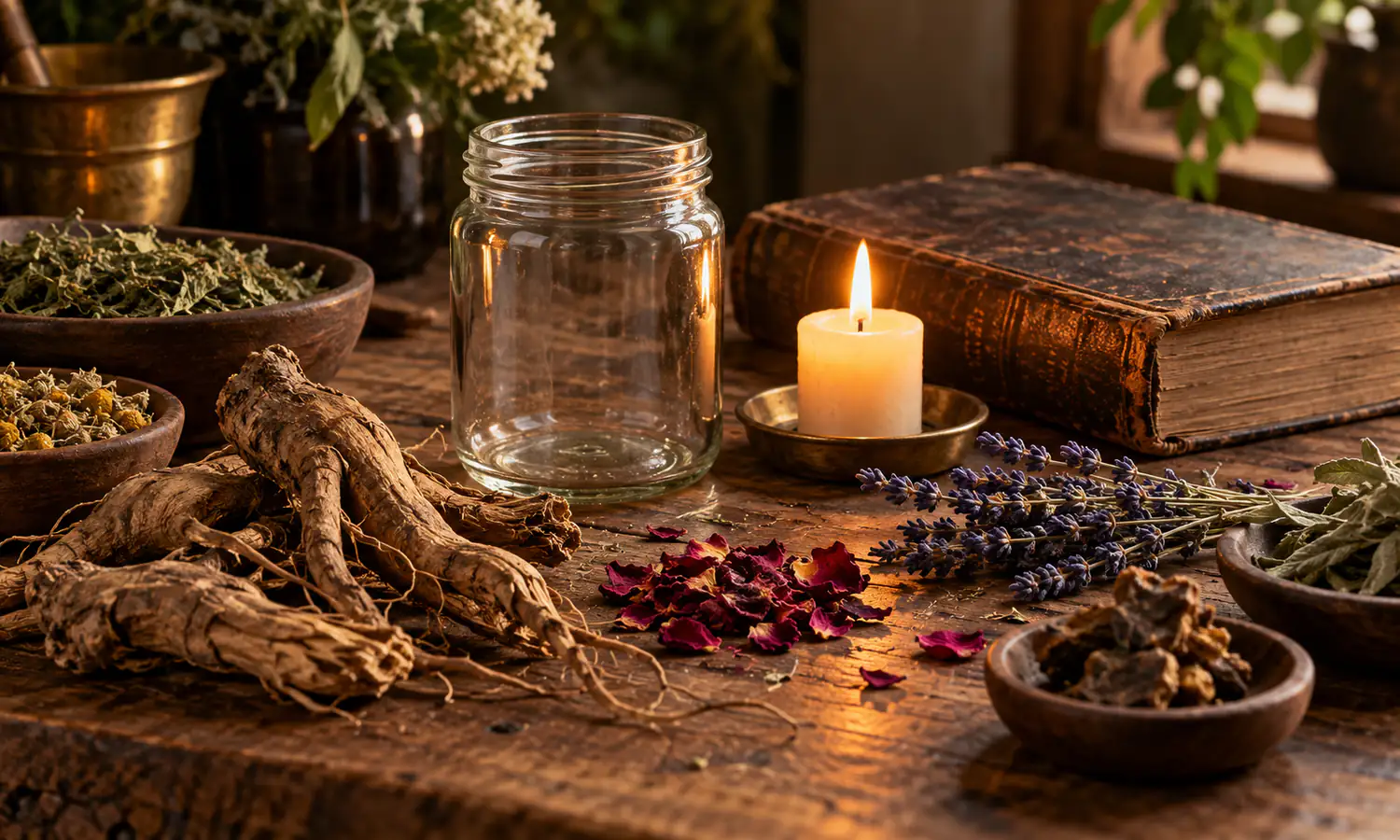
Traditional lists often include honey or sugar, rose petals, cinnamon, lodestone, orris root, and red flannel for bags. Each item is said to stand for something, such as sweetness, warmth, or drawing power. Some roots are hard to source responsibly, so many people use pantry herbs instead.
Check for allergies, keep herbs away from pets, and never swallow an herb or oil unless a qualified professional says it is safe. Test any skin-safe oil on a small patch first.
A spiritual bath is an herbal wash meant for cleansing or renewal. If you try one, choose gentle, familiar herbs and patch-test first. Skip it if you have sensitive skin, are pregnant, or have a health condition, unless your doctor agrees.
Some older formulas name a specific person and aim to draw, hold, or turn that person’s feelings. We do not give instructions for that. It crosses the consent line, and it can leave the person casting it stuck in waiting.
This adaptation is about you, not anyone else. Nothing in it names or targets a person. You will need a small cotton or flannel bag, a pinch of dried rose petals or lavender (skip them if you have allergies), a small stone or coin, a slip of paper, a pen, and a cord.
Fire safety: if you add a candle, place it on a heat-safe dish, never leave it unattended, and keep the cloth bag far from the flame. An LED candle works well.
Prefer no herbs? Use only the paper and a small stone. The written sentence and your own attention matter most in this practice.
While you work, you might ask yourself a few questions. What does safe love look like for me? Which habits will I bring to a relationship? Who supports me? Write down any answers you want to keep.
Hoodoo belongs to a living community with a painful and proud history. Respect is practical. Here are a few simple habits:
Be cautious about anyone who promises secret “ancestral power,” pushes you to pay for extra work, or says bad luck will follow unless you act fast. These are scam patterns, not hoodoo. Be mindful, too, of mass-market kits that copy the tradition without crediting where it comes from.
The phrase “black magic” has also long been used to stereotype Black folk traditions, so it is best avoided here. Our guide to black magic love spells explains what that label usually means today.
Practitioners describe hoodoo workings as prayer-like acts of intention done with the hands and symbolic objects. Many say the process brings focus and calm. That can change how you show up, but it does not control anyone else.
No working can promise a partner, a call, or a reunion, and there is no reliable timeline. Some people feel nothing special after a working, and that is normal. Others feel steadier. Both experiences are ordinary, and neither one proves anything about another person’s feelings.
The healthiest measure is what you do next. If a mojo bag helps you feel ready to date, talk honestly, or set a boundary, it has served its purpose. If you feel stuck waiting, talk with a counselor or a trusted friend. If a relationship involves abuse, stalking, or threats, contact local support or emergency services, and respect any block or no-contact request.
A hoodoo love spell is a working from hoodoo, an African American folk tradition also called conjure or rootwork. Common forms include honey jars, mojo bags, dressed candles, and condition oils. Practitioners see them as acts of prayer and intention. No working can promise a result, and workings aimed at a specific person raise serious consent concerns.
Hoodoo is an African American folk practice from the American South, and it is not a single religion. Vodou is a religion with West African roots practiced in Haiti, and Louisiana Voodoo is its own regional tradition. The terms are often mixed up online, but they have different histories, beliefs, and practices.
Traditional lists often include honey or sugar, rose petals, cinnamon, lodestone, orris root, and red flannel for bags. Each item is said to stand for something, such as sweetness or attraction. Check for allergies, keep herbs away from pets, and never swallow an herb or oil unless a qualified professional says it is safe.
Views differ. Some practitioners welcome respectful learners, while others ask outsiders to be careful. Learn from Black teachers and historians who share publicly, credit your sources, and avoid claiming a lineage you do not have. If you are unsure, start with simple, self-focused practices and leave closed family or community rites alone.
Disclaimer
Disclaimer: This article is for education and cultural understanding only and does not replace learning from practitioners of the tradition. No working can promise a particular outcome in love. Always respect other people’s consent and boundaries, and seek professional or emergency help when you feel unsafe or overwhelmed.