Weekly Love Guidance
Consent-first, practical guidance on love traditions, reconciliation, boundaries, and relationship clarity.

Love. Clarity. Choice.
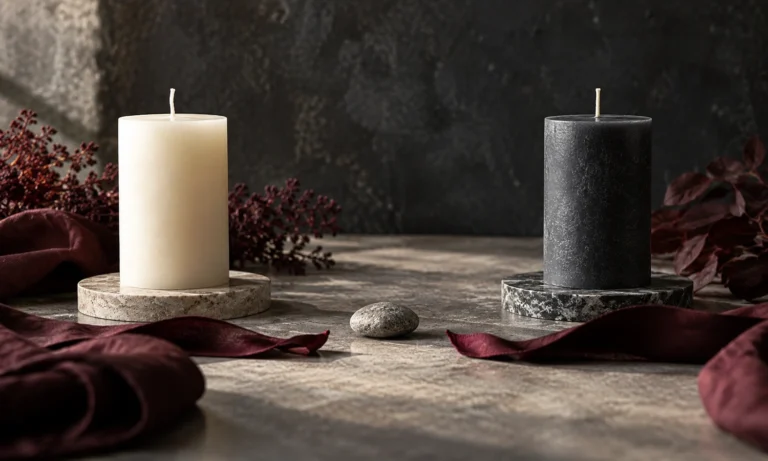
Quick answer: In separation rituals, candles are symbolic focal points for endings, boundaries, clarity, or emotional release. Black may represent banishing or closure, white may represent peace and protection, and two separate candles may represent two paths. These meanings vary, and no candle can guarantee a breakup. The safest approach centers on releasing your own attachment and uses strict fire precautions—or LED candles.
Related guidance: Begin with separation methods, ethics, and risks, compare how timing is interpreted, review how symbolism changes by intent, and learn how to close a ritual safely.
| Color or setup | Traditional symbolism | Safe use | Avoid |
|---|---|---|---|
| White | Peace, clarity, or protection | Use a stable holder or LED candle | Leaving flame unattended |
| Black | Ending, release, or banishing | Ventilate the room and keep combustibles away | Treating soot as proof of danger |
| Two candles | Symbolic distance between people or patterns | Keep candles spaced on a heat-safe surface | Moving lit candles by hand |
| Any available candle | Personal focus rather than fixed color rules | Follow manufacturer instructions | Burning herbs, oils, or unsafe materials |
Key Takeaways
Black candles are often associated with endings, banishing unwanted patterns, protection, and absorbing or releasing negativity. In some traditions, black carries different meanings, so it should not automatically be described as harmful.
White commonly represents clarity, peace, purification, and protection. It is also widely used as a substitute when another color is unavailable. Gray may symbolize neutrality and cooling conflict. Blue may represent calm communication and emotional distance without hostility.
Some people use two candles in colors representing the individuals involved. For an ethical self-release practice, one candle can represent you and the other the relationship pattern—not another person’s will. Moving them farther apart can symbolize accepting distance and choosing a separate path.
Color is optional. Plain unscented candles are enough. The words you choose and the behavior that follows matter more than finding an allegedly “perfect” shade.
Before lighting anything, write the desired outcome in direct language. “I want my partner to leave someone else and choose me” depends on controlling multiple people. “I release my involvement in this triangle and choose relationships built on honesty” focuses on your agency.
Other balanced intentions include:
If you need to leave an unsafe relationship, use the candle only as a private symbol. Create a real safety plan with trusted people or a qualified service. Do not announce a ritual if doing so could escalate danger.
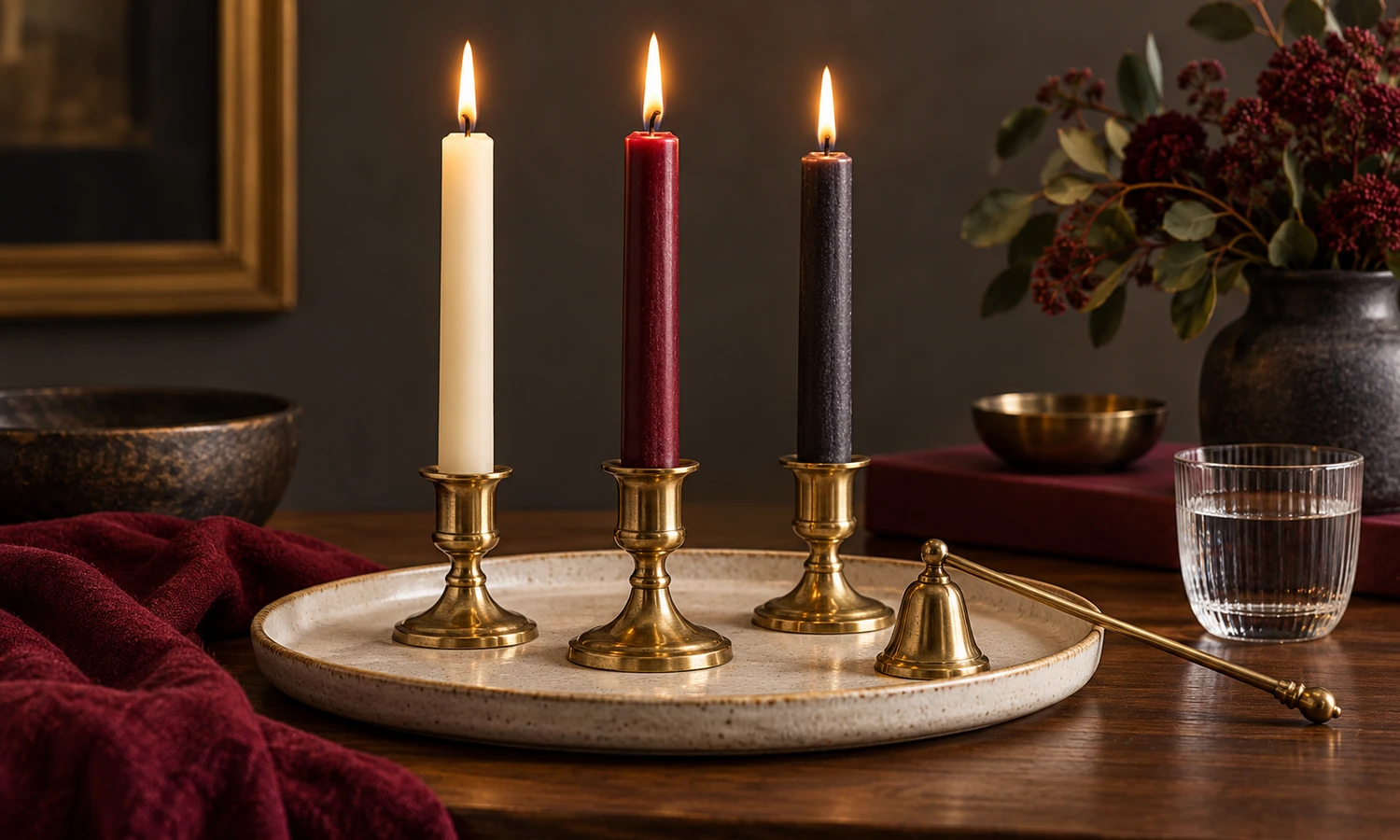
Use two small candles in stable holders, a nonflammable surface, and a written intention. LED candles are recommended if pets, children, limited ventilation, rental rules, or anxiety make open flame unsuitable.
Place the candles several inches apart. Let the first represent you. Let the second represent the harmful dynamic, attachment, or chapter you are leaving—not a target to punish. Read your intention aloud.
If using real candles, light them with long matches or a utility lighter while keeping sleeves and hair away. Sit quietly for a few minutes. Move your own unlit holder slightly farther from the other only after both flames are extinguished and the holders have cooled. Never move a burning candle.
Say: “I choose distance from this pattern. I keep the wisdom and release the struggle. I do not need to control another person to move forward.”
End by writing one action you will take: mute an account, stop contacting a rival, arrange a safe belongings exchange, or schedule support. Candle symbolism becomes useful when it supports a real boundary.
Place candles on a level, heat-resistant surface at least a foot from paper, fabric, dried plants, decorations, and clutter. Keep them away from drafts, windows, fans, children, and pets. Tie back long hair and avoid loose sleeves.
Never coat a candle heavily in oil or roll it in dried herbs. Both can increase flame size or cause unpredictable burning. Do not connect candles with string; it can ignite rapidly. Do not burn photographs, notes, plastic, treated wood, or unknown powders indoors.
Keep a metal lid or candle snuffer nearby and know how to extinguish the flame. Water can spread hot wax or crack glass, so use an appropriate extinguisher for an actual fire and call emergency services when necessary. Stop using a container candle if the glass is chipped, overheated, or behaving unpredictably.
Do not let a candle burn all night or while you leave the room. A ritual is complete when you choose to close it; the candle does not need to consume itself.
Online guides may assign meanings to tall flames, smoke, soot, popping, wax trails, or one candle burning faster. Most of these variations have ordinary physical explanations: wick length, drafts, wax composition, fragrance, dust, container shape, or uneven surfaces.
You may use the flame as a prompt for reflection, but do not treat it as factual information about another person’s feelings. A flicker does not prove resistance. Soot does not prove a curse. A candle going out does not predict failure.
If the flame becomes high, smoky, or unstable, extinguish it. Safety is not a spiritual test. If interpreting every detail increases anxiety, switch to LED candles and focus on the written intention.
Extinguish candles safely and let the holders cool. Reuse them if they remain in good condition. Wrap broken wax for household disposal according to local rules. Do not leave glass, wax, salt, oils, pins, or candles in parks, waterways, crossroads, cemeteries, or someone else’s property.
Keep your written action plan and discard the emotional statement if that symbolizes release. Then complete the practical step you named. If you are separating from a shared household, practical matters—housing, money, documents, children, pets, and safety—deserve careful planning beyond ritual.
Black is commonly associated with endings or banishing, while white can represent peace, protection, and clarity. Traditions vary, and any safe candle can serve as a personal symbol.
No. One candle can represent your commitment to release a pattern. Two are useful only if the visual symbolism helps you reflect.
Yes. An LED candle provides a focal point without flame and is the best option in many homes, dorms, rentals, or situations involving children and pets.
Check ordinary causes such as the wick, wax, or airflow. Do not interpret it as proof of spiritual danger. Relight only if it is safe, or end the practice.
No. Extinguish it whenever you finish or need to leave. Never sacrifice fire safety for a ritual instruction.
Disclaimer
Disclaimer: Candle and color meanings are cultural or personal symbols, not proven mechanisms for controlling relationships. Follow local fire rules and manufacturer instructions. Do not burn unsafe materials, trespass, or involve another person without consent. For immediate danger or an unsafe relationship, use qualified support and a practical safety plan.