Weekly Love Guidance
Consent-first, practical guidance on love traditions, reconciliation, boundaries, and relationship clarity.

Love. Clarity. Choice.
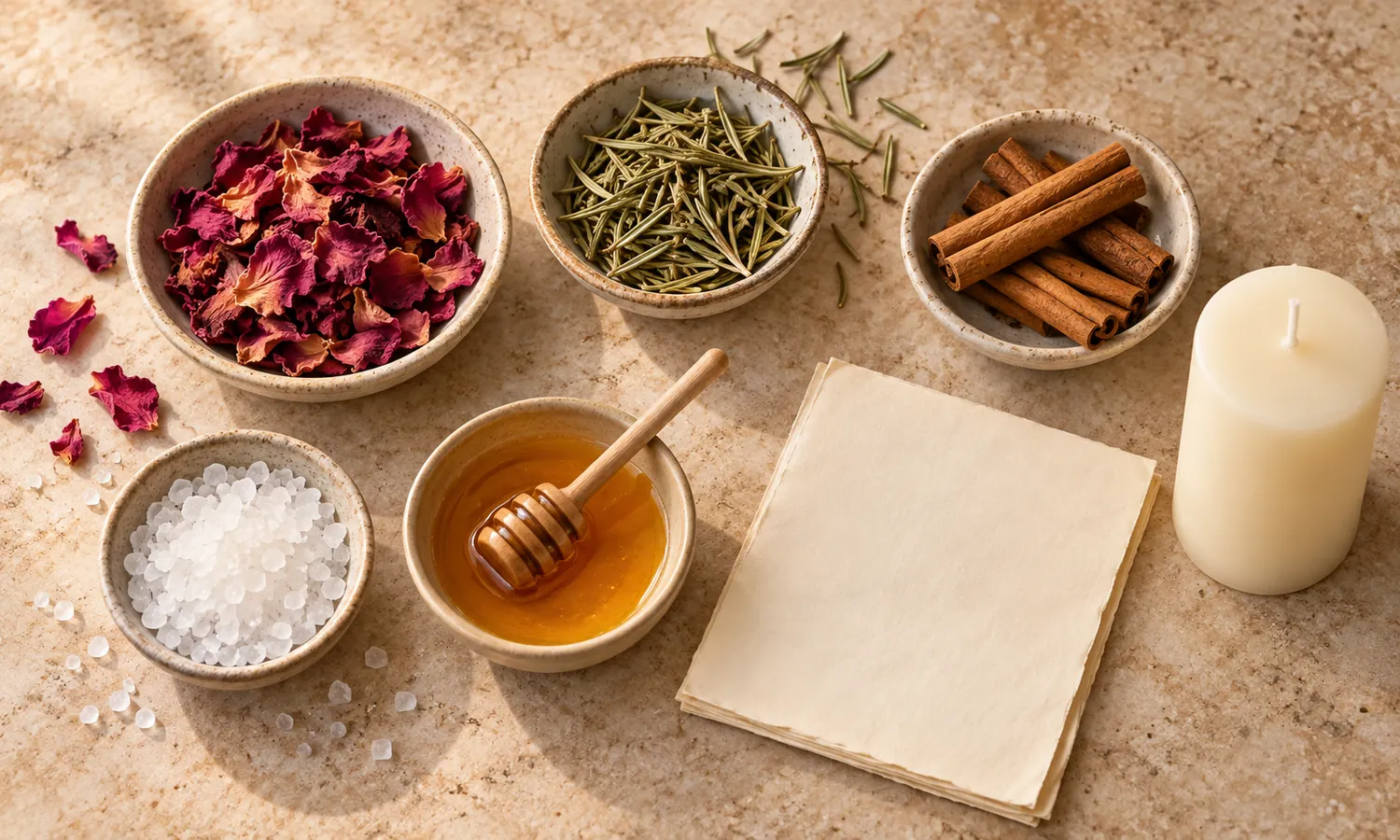
Quick answer: Common reconciliation rituals use candles, paper, water, honey, rose, rosemary, lavender, and personal words or prayers as symbols of peace, clarity, affection, memory, and communication. These objects do not guarantee that another person will return. Their useful role is to give structure to reflection and help you choose respectful next steps.
Related guidance: Start with the broader reconciliation tradition, follow a consent-first approach, learn what meaningful change looks like, and compare honey-jar symbolism.
| Ingredient | Traditional symbolism | Safety note | Optional substitute |
|---|---|---|---|
| Candle | Focus and clarity | Use a stable holder; never leave flame unattended | LED candle |
| Honey | Sweetening and warmth | Do not ingest ritual mixtures; clean sticky spills | Maple syrup in a sealed symbolic jar |
| Rose | Affection and openness | Check fragrance sensitivity and pet safety | Paper rose or rose-colored ribbon |
| Rosemary | Memory and clarity | Avoid smoke if it irritates breathing | A written memory or intention |
Key Takeaways
A candle creates a visible focal point and marks the beginning and end of a ritual. White is often used for clarity, cleansing, or peace. Pink may symbolize tenderness, emotional repair, and gentle affection. Blue is commonly associated with calm speech and truthful communication. Some traditions use red for passion, but reconciliation usually benefits more from steadiness than intensity.
Color meanings vary across communities, so there is no universally correct candle. An unscented white tea light is enough. What matters is the meaning you consciously assign to it.
Place any candle in a stable, heat-resistant holder, away from curtains, pets, children, and paper. Never leave it unattended. If candles are not allowed where you live, use an LED candle, a small lamp, or simply sit near natural light. A safer substitute does not make a reflective practice less meaningful.
Writing turns an emotional wish into words you can examine. Plain paper can represent a fresh start. Some people choose pink paper for affection or blue ink for honest communication, but specialized stationery is optional.
Instead of writing commands about another person, divide the page into three parts:
A balanced statement might be: “May resentment soften, may truth be spoken kindly, and may each of us freely choose what supports our well-being.” This is more ethical and more useful than writing that someone “must” call, return, or obey.
Avoid using signatures, documents, or private messages taken without permission. You do not need a photograph or personal possession to create a meaningful ritual.
Water commonly symbolizes emotional flow, cleansing, and the ability to begin again. A small bowl can be used as a reminder to release urgency before communicating. Dispose of it normally after the ritual; there is no need to pour mixtures outdoors where they could harm plants or animals.
Salt may symbolize protection, boundaries, and purification. Use only a pinch if it has personal meaning. Large amounts can damage soil, surfaces, or plumbing.
Honey and sugar are traditionally associated with sweetness, warmth, and softening harsh communication. Symbolically, they can prompt a useful question: “How can I speak with more kindness?” They should never represent making someone “sweet” against their will. Keep food ingredients away from candle flames and do not leave sticky mixtures where they attract insects.
If you have allergies, pets, or limited supplies, substitute a written word—“peace,” “patience,” or “kindness”—for any physical ingredient.
Rose petals are widely associated with affection, compassion, and emotional openness. Lavender often represents calm, healing, and peaceful sleep. Rosemary can symbolize remembrance, honesty, and mental clarity. Chamomile is commonly linked with patience and soothing conflict. Basil may represent harmony and protection in the home.
These meanings are traditional associations, not medical or scientific effects. Do not ingest herbs unless they are food-grade and safe for you. Never burn unknown plants indoors; smoke can irritate lungs and may be dangerous to pets. Dried herbs can also ignite quickly around candles.
Fresh or artificial flowers, printed images, or written plant names are safer alternatives. Choose one or two symbols rather than buying a long list. A simple ritual is easier to understand and less likely to become a source of anxiety.
For a basic reconciliation reflection, choose four elements:
Arrange them on a clear surface. Write your intention, light or switch on the candle, and read the statement slowly. Hold the optional symbol and name one quality you want to bring into any future conversation. Touch the bowl and name one habit you are ready to release. Close by saying, “I welcome only communication that is mutual, safe, and honest.”
The real follow-through is behavioral. If respectful contact is appropriate, send one pressure-free message. If the other person has requested no contact, keep the ritual private and direct its meaning toward your own healing.
Avoid bodily fluids, unknown powders, toxic plants, unattended flames, and mixtures placed in another person’s food or drink. Never trespass to bury or hide objects on someone else’s property. Do not take hair, clothing, jewelry, or private photographs without permission.
Be cautious with sellers who insist that a rare ingredient is required and then demand escalating payments. Fear-based claims—such as saying a dangerous curse will occur unless you buy another service—are a major warning sign.
An ingredient should help you reflect, not frighten you or violate another person’s privacy. If the ritual becomes compulsive or worsens distress, pause and talk with someone you trust or a qualified mental-health professional.
Your written intention is the most useful element because it reveals whether your goal respects consent and acknowledges your responsibility. No rare object is required.
Yes. Use safe, accessible items with clear personal meaning. An LED candle can replace fire, a written word can replace an herb, and plain water can replace elaborate mixtures.
No. A photo is not necessary. If using one feels invasive or fuels fixation, omit it and focus on your own actions and values.
Extinguish flames, discard or compost safe plant material, pour out plain water, and keep or recycle your written intention. Avoid leaving wax, salt, glass, or herbs outdoors.
Disclaimer
Disclaimer: Ingredient meanings differ across spiritual and cultural traditions. This content is educational and does not claim that objects or rituals can control another person or guarantee reconciliation. Use fire, herbs, and household materials safely, respect consent and privacy, and seek professional support when relationship distress becomes overwhelming.