Weekly Love Guidance
Consent-first, practical guidance on love traditions, reconciliation, boundaries, and relationship clarity.

Love. Clarity. Choice.
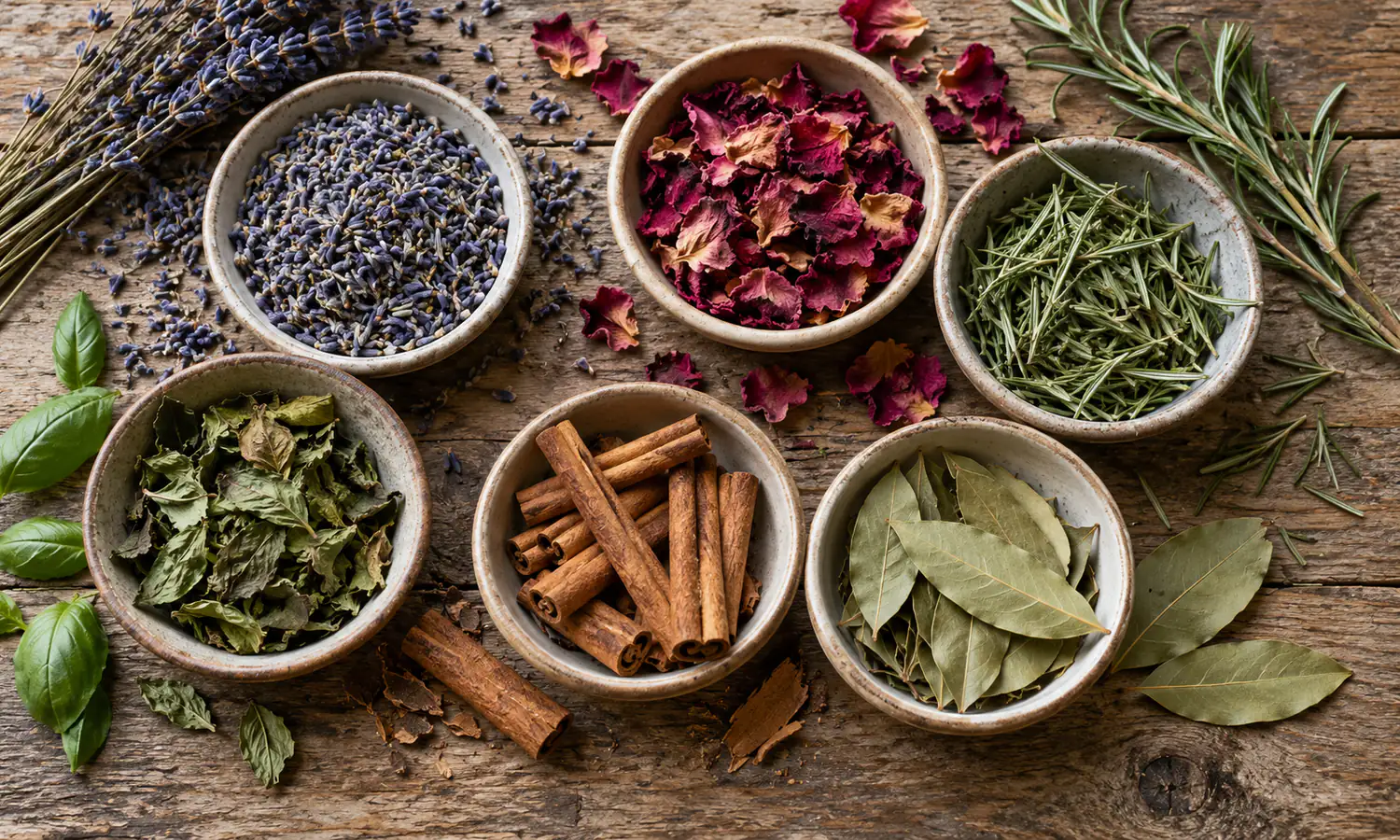
A respectful guide to 15 traditional love spell herbs, what each is said to symbolize, how they are used, and how to keep your practice safe.
Quick answer: Love spell herbs are plants that folk traditions link with romance, calm, warmth, or self-worth, such as rose petals, lavender, cinnamon, and bay leaf. Practitioners use them in jars, sachets, baths, and candle rituals as symbols of an intention. They are not proven to change anyone’s feelings. Use them for yourself, never hide them in anyone’s food or drink, and check allergies, pets, and pregnancy first.
Related guidance: Read our overview of love spell meaning and ethics, try the honey jar ritual, see how colors work in a red candle love spell, or learn how long a love spell takes to work.
| Theme | Herbs | Traditional meaning and common use |
|---|---|---|
| Romance and attraction | Rose petals, jasmine, hibiscus | Affection and beauty; used in jars, baths, and sachets |
| Warmth and passion | Cinnamon, cardamom, vanilla | Heat and energy; used in small amounts for scent |
| Calm and gentle love | Lavender, chamomile, lemon balm | Peace and self-soothing; used in sachets and self-care baths |
| Wishes, loyalty, and memory | Bay leaf, rosemary, basil | Wishes and devotion; used for written intentions and decor |
| Joy, courage, and intuition | Catnip, yarrow, mugwort | Happiness and dreams; used in sachets and dream pillows |
Key Takeaways
People have linked plants with love for centuries. Victorian “flower language” gave each bloom a meaning, and older folk herbalism tied plants to moods and hopes. Love spell herbs grow out of that habit of giving a plant a symbolic job.
Practitioners call these links “correspondences.” A rose stands for the heart, lavender for peace, and cinnamon for warmth. The herb is not believed to act alone. It is a focus, a physical reminder of what you want to invite into your life.
That is why this guide treats herbs as symbols for your own intention, such as openness, self-worth, or calm. No herb is known to make a particular person love you. Meanings also vary between cultures and writers, so use the lists below as common associations, not strict rules.
The herbs below are grouped by the theme people most often give them. Dried herbs are the usual choice for jars, sachets, and baths. Most practitioners start with just one to three herbs, because a simple ritual is easier to keep calm and safe.
Natural does not always mean safe. Many plants cause allergic reactions, skin irritation, or stomach trouble, and some are poisonous. A few basic habits keep your ritual gentle.
Never eat or drink an herb you cannot name, and never take herbs from the wild without expert identification. Garden and kitchen herbs from trusted sources are the safest place to start.
This short ritual uses three dried herbs and one sentence. It is about you and your readiness for love, not about any other person.
People often ask about a cinnamon love spell, since cinnamon is among the most searched herbs. The same steps apply. Use a small piece for scent, keep it away from your skin and eyes, and treat it as a symbol of warmth toward yourself.
Many practitioners describe feeling calmer or clearer after a ritual like this. That is a personal experience, and it is not a forecast of what another person will do or feel. Let the ritual support your own choices.
Pair the ritual with a real step, such as updating a dating profile, calling a friend, or joining a class. For a one-herb version, see the bay leaf love spell, and for layering several herbs at once, try a love spell jar.
Keep the herbs for yourself and the intention open, such as “I welcome kind, mutual love.” Add a journal page about what you want in a partner, and talk honestly with the people you care about. If you feel drawn to work on a specific relationship, a conversation will always say more than a sachet can.
If loneliness or heartbreak feels heavy, a therapist or counselor can help. If anyone is threatening or stalking you, respect blocks and contact local support services or emergency services.
Common choices include rose petals, lavender, cinnamon, bay leaf, jasmine, chamomile, and vanilla. Folk traditions link them with romance, warmth, calm, and wishes. They are symbols for an intention, not proven ways to change anyone’s feelings. Dried herbs work well in jars and sachets, and you should check allergies, pets, and pregnancy before using any of them.
Rose petals, jasmine, and hibiscus are the herbs most often linked with attraction and affection, while lavender and chamomile are tied to calm and gentle love. Practitioners treat these as symbols for their own openness to love. No herb is known to draw a specific person toward you, so pair any ritual with real-world steps.
Yes, cinnamon is a traditional symbol of warmth, energy, and enthusiasm, and many practitioners add a stick or a small pinch to a jar or sachet. Use it only for yourself. Cinnamon can irritate skin, so avoid putting it directly on the body, and never hide it in anyone’s food or drink.
Not always. Burning herbs creates smoke that can irritate lungs and upset pets and birds, so keeping dried herbs in a jar or sachet is simpler. Never drink or eat an herb you cannot identify, and ask a doctor or pharmacist first if you are pregnant, nursing, or taking medication. Never leave a flame unattended.
Disclaimer
Disclaimer: This article is for education and cultural interest only. Herbs and rituals are symbols, cannot promise any outcome, and should never be used on another person without their knowledge and consent. Check with a doctor or pharmacist about allergies, pregnancy, or medication, and contact emergency services if anyone may be in danger.