Weekly Love Guidance
Consent-first, practical guidance on love traditions, reconciliation, boundaries, and relationship clarity.

Love. Clarity. Choice.
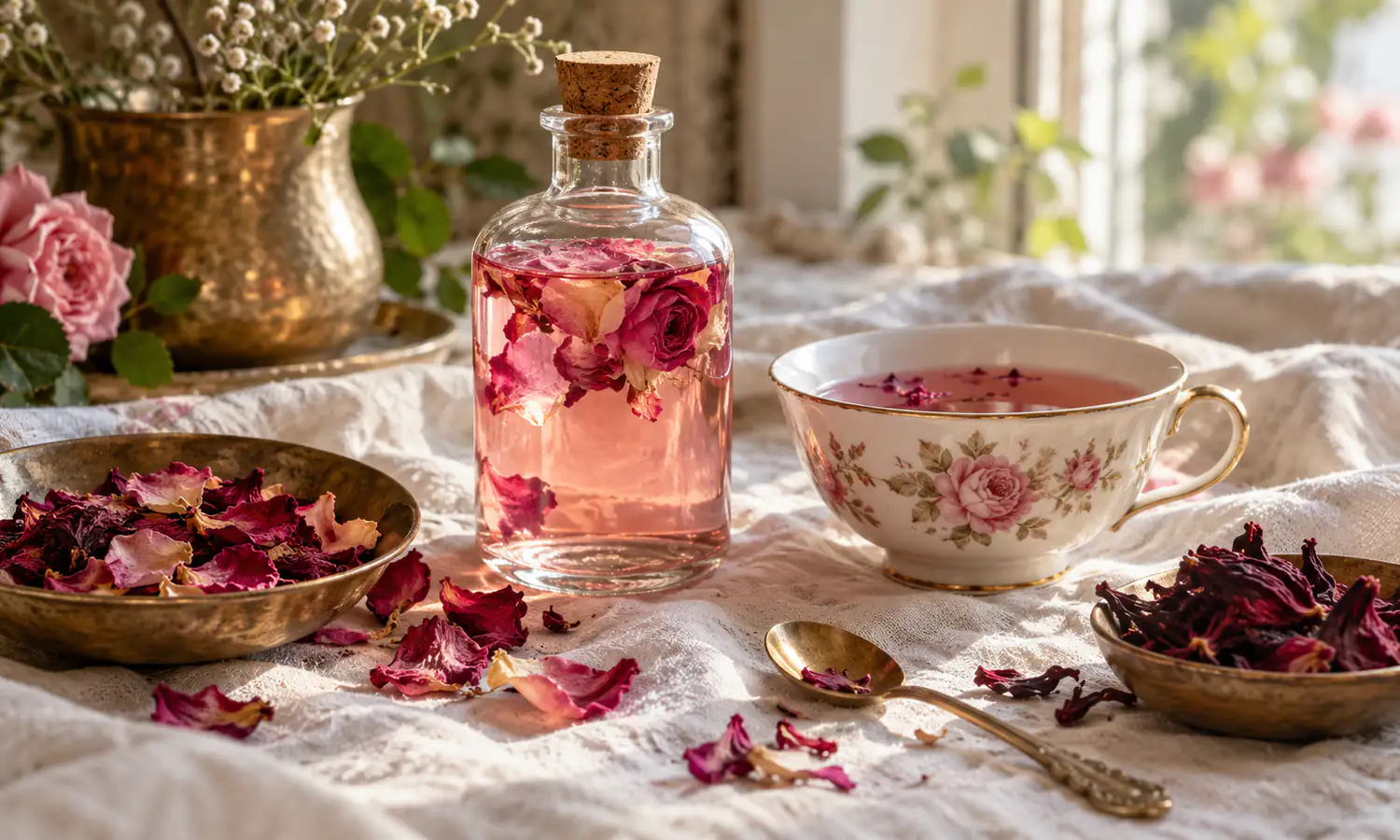
Explore the folklore behind love potions, what their traditional ingredients symbolize, and a safe self-care version made for you alone.
Quick answer: A love potion is a drink or blend said in folklore to awaken romance, traditionally made with herbs, flowers, and sweet ingredients. There is no evidence that any love potion can make another person fall in love. Today, the safe and ethical version is a self-care “potion” for you, such as a bath soak or room mist. Never give anyone a drink, food, or substance without their knowledge.
Related guidance: Explore love spell meaning and ethics, find out whether love spells really work, compare the sweet symbolism of a honey jar ritual, or read about the red candle love spell.
| Ingredient | What it symbolizes | Safer way to use it |
|---|---|---|
| Rose petals | Love, beauty, an open heart | Float in a warm bath or steep in water for a mist |
| Honey | Sweetness and kindness | Stir into your own tea, if honey suits you |
| Cinnamon | Warmth and energy | Keep a stick in a sachet for scent only |
| Lavender | Calm and peace | Tuck dried buds in a sachet or bath bag |
| Vanilla | Comfort and affection | Enjoy the scent or use it in your own cooking |
| Mandrake, nightshade, “Spanish fly” | Notorious in old tales | Never use; these are poisonous |
Key Takeaways
The word “philtre” comes from an ancient Greek term for a love charm or drink. Greek and Roman writers describe these drinks, and some of them treat philtres as dangerous rather than romantic. The idea has lasted for more than two thousand years.
Love potions also fill stories. In the medieval legend of Tristan and Isolde, two people drink a potion by mistake and fall deeply in love. In Shakespeare’s A Midsummer Night’s Dream, a flower juice makes people adore the wrong person. In the opera The Elixir of Love, the famous “potion” turns out to be ordinary wine.
Many of these tales treat a potion as a source of trouble, because feelings produced by trickery are not freely chosen. A feeling that is not freely chosen is not love. Practitioners who follow consent-based paths make the same point today.
In folk tradition, a potion was more than a recipe. People paired it with words, timing, and a clear intention. Modern practitioners often start with plants, and our guide to love spell herbs explains their traditional meanings.
The idea still feels familiar today. Perfumes, teas, and cocktails are sold under the name “love potion” because the phrase promises romance in a bottle. That is marketing and storytelling, not a method for changing anyone’s heart.
Most traditional ingredients were chosen for what they represent. Rose stands for love, honey for sweetness, cinnamon for warmth, and lavender for calm. Practitioners believe these meanings help focus attention on an intention, which is why the ingredients are still popular today.
Fruits appear too. Apples, pomegranates, and strawberries are linked with love in folk symbolism, mostly because of their shape, color, and sweetness. A shared, openly offered treat can be a kind gesture, but it is never a spell on another person.
Old folklore also names far darker ingredients. Mandrake root, nightshade, and the blister beetle known as “Spanish fly” appear in tales about philtres. These substances are poisonous and can cause serious harm. Treat them as story details only.
Two simple rules keep ingredient choices safe. Use only things you already know are fine for your body, such as foods and cosmetics you use often. Keep the “potion” for yourself, whether that means a bath, a mist, or a warm drink.
No ingredient is known to make another person fall in love. Attraction and affection grow from real connection, trust, and choice, which a drink cannot create. Be cautious about any claim that a potion will “bind” or “attract” a specific person.
What a ritual can change is your own state. Making something with care can slow you down, calm your nerves, and remind you what you want from a relationship. Some people find that a steadier mood helps them show up more openly, though no result can be promised.
Fixating on a potion to win one person can also feed anxiety and disappointment. If you notice that happening, step back and talk with a trusted friend or a counselor. A potion should never replace honest communication.
This version is a gentle self-care ritual, not a way to affect another person. Choose one form and move at a calm pace. Patch-test anything new on a small area of skin, and skip any ingredient that you are allergic or sensitive to.
You can repeat the ritual whenever you want a quiet moment, such as a calm weekend evening. There is no required schedule, and repeating it does not make any particular outcome more likely. Let it be a kind habit for yourself and nothing more.
The tea is the only option here that you drink, and it is for you alone. Choose a tea from a sealed box that you already enjoy, and never use garden plants or wild herbs unless an expert has identified them. A plain cup of tea with a calm pause is often all the ritual needs.
If you want candlelight, an LED candle is the safest choice. A real flame should sit on a heatproof surface away from curtains and paper, and it should never be left unattended.
Pregnant, nursing, or taking medication? Ask a doctor or pharmacist before drinking any herbal tea. Honey is not suitable for babies under one year old, and essential oils should never be swallowed.
Secretly giving someone a drink, food, or substance is unsafe and unethical. You cannot know their allergies, medications, or health conditions. Even a harmless-looking ingredient can cause a serious reaction, and putting a substance in someone’s food or drink without consent can be a crime.
Be wary of products marketed as potions to influence a specific person. They are unproven, and you cannot always know what is inside them. Your time and energy are better spent on things you truly control.
If you think someone has given you a substance without your knowledge, get to a safe place, seek medical care, and contact local emergency services. If anyone is stalking or threatening you, respect blocks and reach out to local support services.
No love potion has been shown to make another person fall in love. Real attraction depends on connection, trust, and free choice, which no drink can create. Some people find that making a calming, self-focused potion helps them feel steadier and more open, but no result can be promised, and any effect comes from your own mindset.
Start with a sentence about you, such as “I am open to kind, honest love.” Then make a bath soak with dried rose petals and lavender in a cloth bag, a room mist from cooled rose water, or a tea you already know suits you. Use it only for yourself, patch-test new ingredients, and never leave a flame unattended.
Folklore names rose petals, honey, cinnamon, lavender, and vanilla as symbols of love, sweetness, warmth, and calm. Old tales also mention poisonous plants such as mandrake and nightshade, which should never be used. Choose only familiar, food-safe or cosmetic-safe items, and skip anything you are allergic to or cannot identify.
Secretly giving anyone a drink, food, or substance can cause serious harm and can be a crime in many places, even when the ingredients seem harmless. You cannot know someone’s allergies or medications. Laws vary by location, so this is not legal advice. The safe rule is simple: never give anyone anything without their full knowledge and consent.
Disclaimer
Disclaimer: This article is for education and cultural interest only. No potion, herb, or ritual can promise a result or change another person’s feelings, and nothing here replaces medical or professional advice. Never give anyone a substance without their knowledge, and contact local emergency services if you or someone else may be in danger.