Weekly Love Guidance
Consent-first, practical guidance on love traditions, reconciliation, boundaries, and relationship clarity.

Love. Clarity. Choice.
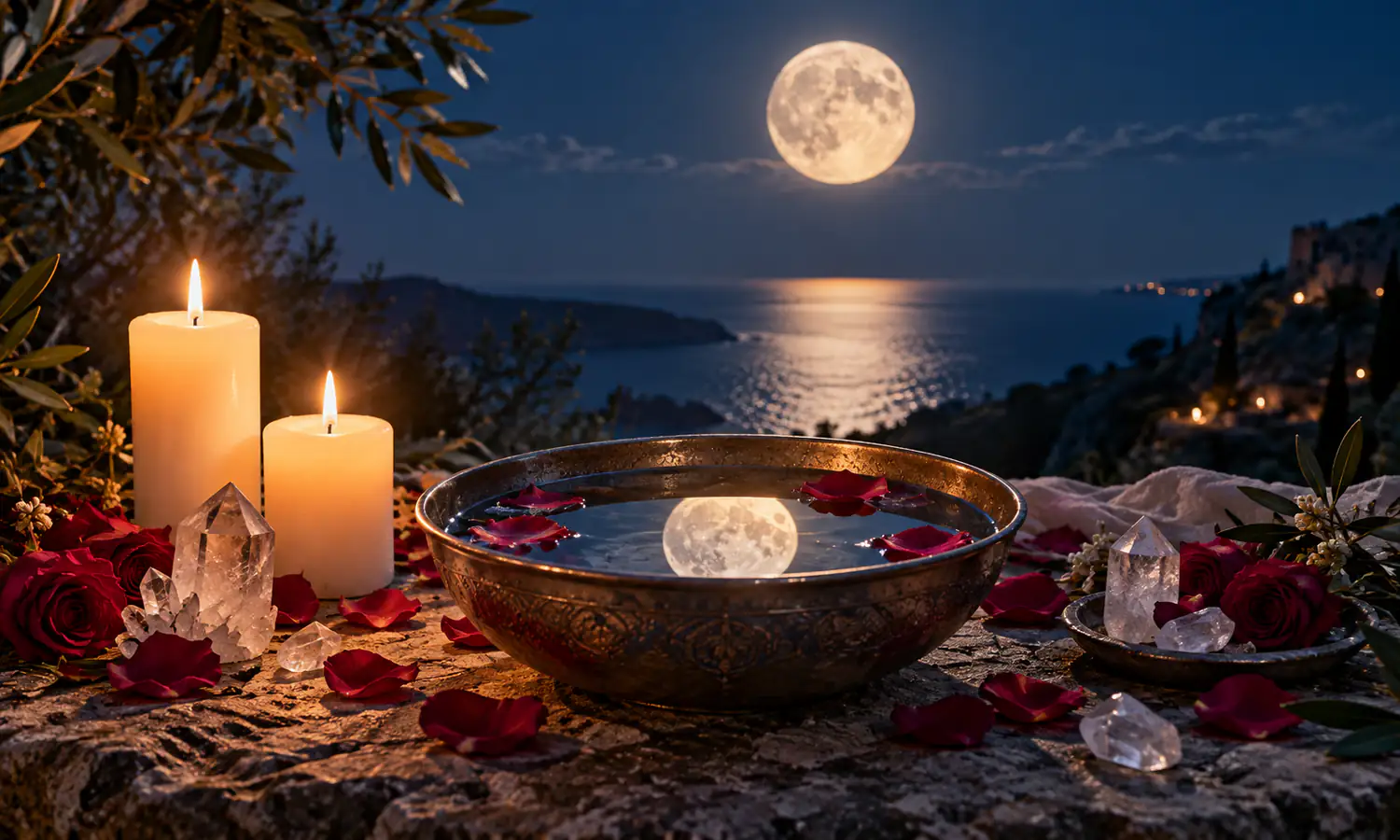
Why practitioners link the full moon with love rituals, how moon phases and Friday are used for timing, and a safe self-focused ritual with realistic expectations.
Quick answer: A full moon love spell is a short, self-focused ritual done on or near the night of a full moon, which practitioners associate with fullness, gratitude, and clarity. Most people use it to appreciate themselves and name the kind of love they welcome. Friday, linked with Venus, is another traditional choice. No moon phase can promise an outcome or change another person’s feelings, so treat the timing as a calming frame, not a rule.
Related guidance: For the wider picture, read about love spells and their ethics, see whether love spells really work, learn how long a love spell is said to take, and compare this ritual with a red candle love spell.
| Moon phase | Traditional theme | Self-focused intention |
|---|---|---|
| New moon | Fresh starts | Decide you are open to love |
| Waxing moon | Growth and momentum | Take one small real-world step |
| Full moon | Fullness and clarity | Appreciate yourself and name what you welcome |
| Waning moon | Releasing | Let go of an old hurt or habit |
| Dark moon | Rest and reflection | Review what you have learned |
Key Takeaways
People have tracked the moon for thousands of years, using its cycle of roughly 29 and a half days as a natural calendar. In folk tradition, that steady rhythm guided the timing of planting, harvests, and rituals. Practitioners of love magic borrowed the idea, since the moon grows, peaks, and fades, and intentions can be matched to each stage.
The phases themselves have a plain explanation. As the moon orbits Earth, we see different amounts of its sunlit half, which is why it seems to grow and shrink. Folk traditions gave those changes meaning long before anyone described the geometry.
Many cultures also named full moons after the season, such as the Harvest Moon, the full moon nearest the autumn equinox. Those names show how closely people tied the moon to daily life. Love magic added its own layer by linking the moon with feelings, gratitude, and emotional tides.
The full moon is usually seen as the high point of that cycle. Practitioners describe it as a time of fullness and completion, which is why many pair it with gratitude and self-worth. Some also use it as a moment to look honestly at what they feel.
It is fair to stay realistic. There is no scientific evidence that the moon changes a spell’s result, and it has no effect on how another person feels. Its real value is structure, because choosing a night gives you a reason to pause, reflect, and set aside quiet time.
The table above shows how traditions link each phase with a theme. A new moon suits beginnings, such as deciding you are ready to date again. A full moon suits appreciation and clarity, and a waning moon suits releasing old patterns.
Friday is another traditional choice. In Western folk tradition and astrology, Friday is associated with Venus, the Roman goddess of love, so some practitioners prefer it for love-related rituals. If clouds hide the moon or the night is busy, a calm Friday evening fits just as well.
The moon is exactly full for only a moment, but it looks full for about three nights. Many practitioners therefore use the night before or after, and the exact date can differ by time zone, so check a moon calendar or weather app for your area.
If you choose a new moon instead, keep the same steps but change the focus. Write one intention for something you want to begin, such as joining a group or being more open on dates. Keep the appreciation list short, since the new moon is about beginnings rather than fullness.
Many practitioners use a waning moon for releasing instead. Write one sentence about a habit or worry you are ready to set down, read it aloud, then tear the paper up and recycle it. This pairs well with healing after a breakup.
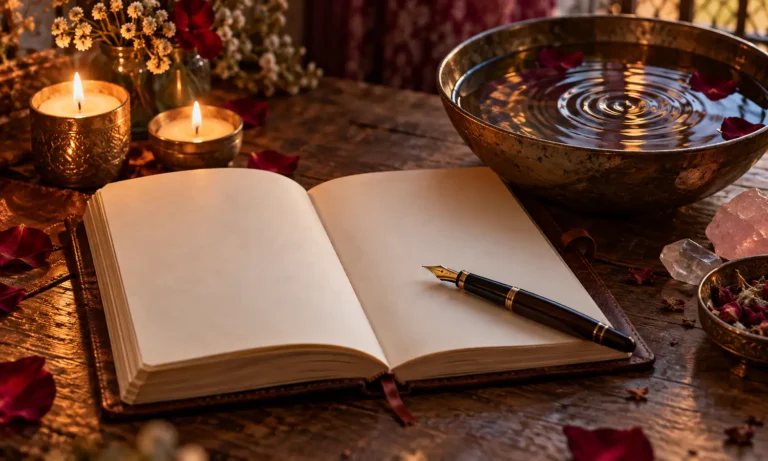
This gratitude-and-clarity ritual uses a candle, paper, and a pen, and takes about twenty minutes. For more on the basics, see our beginner’s guide to casting a love spell.
Some practitioners also leave a clean, sealed jar of water on a windowsill to be “charged” by the moon. If you try this, use the water only to water a plant or rinse your hands, and do not drink water that has sat outside.
On a busy night, a short version works too. Write one line of appreciation and one line of intention, read both aloud, sit quietly for two minutes, and close with thanks. The length matters less than your attention.
Most people describe the effect as a change in mood rather than a sudden event. You may feel calmer, more grateful, or clearer about what you want. Practitioners suggest noting those shifts in a journal over the next few weeks, and a self-love spell can be a gentle follow-up.
Because no ritual can promise an outcome, avoid setting a deadline such as “before the next full moon.” Waiting for a sign can raise anxiety rather than lower it. If worry, loneliness, or grief begins to feel heavy, talk with a trusted friend, a counselor, or a therapist.
Journaling prompts can make the days after a ritual more useful. Try answering one each evening for a week.
If your ritual is connected to someone who has asked for no contact, respect that and do not reach out. If you face abuse, stalking, or threats, contact local support services or emergency services.
Watch for signs that the ritual is feeding worry rather than calm. If you feel pressure to perform it perfectly each month, or you track the moon to decide whether to message someone, step back. A moon calendar is a tool for rest and reflection, and it should never become a reason to pursue a person who has said no.
A healthier path is to pair the ritual with action. Reach out to friends, try a new class, or talk with a counselor about a breakup. The moon can set the mood, but your choices shape your life.
Many practitioners think so, because the full moon represents fullness, gratitude, and clarity, which suit self-focused love rituals. It is a tradition, though, not a rule. No evidence shows that the moon phase changes a spell’s result, so choose a night when you feel calm, private, and unhurried.
It depends on your intention in folk tradition. A new moon is linked with fresh starts, a waxing moon with growth, a full moon with gratitude and clarity, and a waning moon with releasing old patterns. No phase can promise an outcome, so simply pick the one that matches your purpose.
Friday is the traditional favorite because it is associated with Venus, the Roman goddess of love. Some practitioners also choose the night of a full or new moon. These are customs rather than rules, and any calm, private time works. Avoid rushing, and skip the ritual if you feel very upset or exhausted.
Yes. The moon’s phase still holds when clouds cover it, and a moon calendar will confirm the date. You can also choose the night before or after, or a calm Friday evening instead. If you cannot see the moon, simply picture it while you sit quietly and read your intention aloud.
Disclaimer
Disclaimer: This article is for education and cultural interest only. Moon phases and rituals cannot promise an outcome or change another person’s feelings, and nothing here replaces advice from a therapist, doctor, or legal professional. Always respect other people’s consent and boundaries, practice fire safety, and contact local support or emergency services if you feel unsafe.