Weekly Love Guidance
Consent-first, practical guidance on love traditions, reconciliation, boundaries, and relationship clarity.

Love. Clarity. Choice.
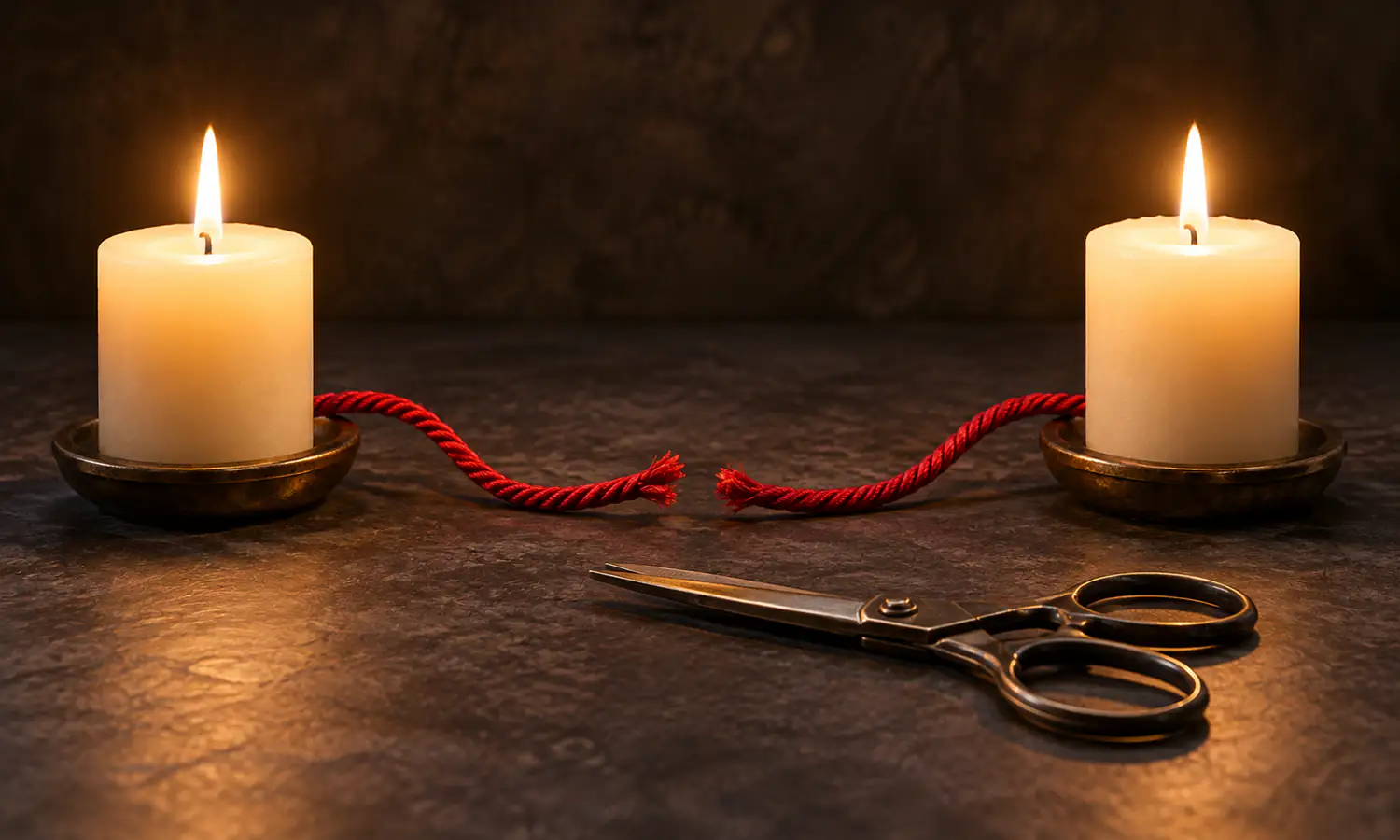
A cord cutting spell is a symbolic ritual for releasing an ex or an unhealthy attachment. Here is a ritual version, a meditation version and what to realistically expect.
Quick answer: A cord cutting spell is a symbolic ritual for releasing an emotional tie to an ex, a past relationship or an unhealthy pattern. Practitioners picture an invisible cord between you and the other person, then cut it with string and scissors or a guided meditation. It does not control anyone, and it cannot promise closure. Think of it as a structured way to honor your grief and choose your own peace, alongside real support.
Related guidance: If you are still deciding what comes next, explore our guides on whether to get back with an ex, how to break a love binding spell, whether love spells really work and love spell ethics.
| Approach | What it involves | Often chosen when |
|---|---|---|
| Cord cutting ritual | String, scissors and a short spoken intention | You want a physical, symbolic ending |
| Cord cutting meditation | A quiet visualization with no tools | You feel raw and want something gentle |
| Unsent letter | Writing everything you would say, then not sending it | Your feelings are too big to hold in |
| Boundaries or no contact | Muting, blocking or limiting messages | The connection still drains you |
| Counseling or support | Talking with a professional or trusted people | Grief is affecting sleep, work or health |
Key Takeaways
Many spiritual traditions describe an invisible link between people who have been close. Some modern practitioners call it an energetic cord. It is said to form through shared history, strong emotion or repeated habits, and to keep tugging at you long after a relationship ends.
A cord cutting spell is meant to loosen that tie. The imagery is old: cutting or untying a thread has long stood for ending a bond, and in Greek myth the Fates spin, measure and cut the thread of a life. The ritual is a symbol of release, not a weapon. It is meant to free you, not to punish or control anyone.
People look for this practice after a breakup, after a friendship turns toxic, or when they keep checking an ex’s profile. The cord can also stand for something that is not a person, such as a job you left, a family pattern or a habit of constant worry. Whatever it represents, the work stays on your side of the connection.
If you would like to turn that same attention toward yourself afterward, a self love spell is a natural companion to this practice.
This version uses a piece of string and scissors. It names your own feelings instead of the other person’s actions, and it needs nothing that belongs to anyone else. Never use a photo, a gift or a lock of hair from the person you are releasing.
Some practitioners like to do release work during the waning moon, when the moon appears to shrink, because it matches the theme of letting go. That is a tradition, not a requirement, and any quiet evening will do.
You will need a length of string or ribbon that you own, scissors, a notebook and a pen. A candle is optional. If you use one, choose an LED candle, or never leave a real flame unattended and keep it away from paper and string. Do not burn the cord itself.
Repeating the ritual again and again to make it work can quietly turn it into another way of staying attached. One sincere attempt is a good place to start, and you can always return to it if a new wave of feeling arrives.
A meditation is gentler if you feel raw, and it needs nothing but a few quiet minutes. It is also private, which many people prefer. The steps below keep your attention on yourself and never ask you to send anything to the other person.
If picturing the person brings up panic or painful memories, stop, open your eyes and feel your feet on the floor. You can try again another day or skip the visualization entirely. A counselor can help you work through difficult memories at a pace that feels safe.
A cord cutting ritual is not a switch that turns feelings off. Some people feel lighter afterward. Others feel sad, tearful or restless for a while, and that is part of grieving a relationship, not a sign the ritual failed.
Practitioners often describe the effect as gradual, with old urges returning now and then. When they do, treat them as information rather than failure. Take a few slow breaths, go for a walk or message a friend instead of your ex.
If the string feels too symbolic, an unsent letter can do similar work. Write everything you would say to the person, including the anger and the thanks, then read it once and throw it away or keep it private. Because it never gets sent, it cannot reopen a conversation you are trying to close.
Some people say they think about the person less often, reach for the phone less, or have more energy for their own routines. Those are personal descriptions, not proof that a spell worked, and time, support and your own choices deserve much of the credit. No ritual can promise closure, a particular timeline or a change in another person.
A few habits can turn a healing ritual into a trap. Watch for these:
A healthier path combines the ritual with real support: limited contact, an unsent letter, time with friends and, if grief does not ease, therapy or counseling. If you are hoping to stop something from the outside, such as gossip or harassment, our freezer spell guide explains why naming a behavior works better than naming a person.
If an ex has been abusive, stalks you or makes threats, safety comes first. Respect any blocks that are in place, keep records, and contact local support services or emergency services.
A cord cutting spell is a symbolic ritual for releasing an emotional tie to a person, pattern or memory. Practitioners imagine an invisible cord between you and the other person, then cut or untie it with string, scissors or a meditation. It works on your side of the connection only and does not control anyone else.
There is no scientific evidence that a cord cutting ritual changes any energy. Many people say it helps them mark an ending, process grief and feel more settled, which can be meaningful on its own. Treat it as a symbolic practice that supports your own choices, alongside boundaries and, if needed, counseling.
Write what you want to release, tie a loose knot in a piece of string for each feeling, say your intention aloud, then cut the string with scissors. Throw the pieces away rather than burning them. If you use a candle, choose an LED one, and finish with a small act of self-care.
Yes, because the ritual works on your own side and needs nothing from them. It should never involve their belongings or be used to hurt them. If you share children or a workplace, release the emotional charge while keeping practical contact respectful. If contact is unsafe, respect blocks and seek local support.
Disclaimer
Disclaimer: This article is for education and personal reflection only. A cord cutting ritual is symbolic, cannot promise any outcome, and never replaces counseling, medical care or legal protection. If you feel unsafe, respect blocks and contact local support or emergency services.